
Church Emergency Burst Pipe Water Loss Cleanup

Discreet Church Response • Sanctuary / Fellowship Hall / Classrooms Call Now: (405) 691-8800

Church Water Damage Restoration in Norman, OK

When water hits a sanctuary, it doesn’t just wet carpet — it threatens worship flow, ministry schedule, children’s areas, offices, stage platforms, and indoor air quality. This page is built for pastors, church boards, and facility teams who need a fast, respectful, professional response — done right the first time.

Ministry-First Approach Documentation + Verification Rapid Stabilization

Fast Church Stabilization

Discreet Response Respectful crews, controlled equipment placement, clean traffic flow.
Protect Key Spaces Sanctuary, stage, baptistry, kids wing, offices, fellowship hall.
Stop the Spread Early stabilization reduces hidden moisture migration into assemblies.
Call (405) 691-8800
If water is active right now: shut off the source if safe, avoid powered electronics on wet flooring, and don’t assume “it’ll dry.” Hidden moisture is where projects get expensive.
First 24–48 Hours Matter

Water can migrate under flooring and into wall cavities quickly. Early stabilization helps reduce scope and disruption.

“Looks Dry” Can Be Misleading

Sanctuary carpet, padding, stage platforms, and baseboards can hold moisture long after the surface feels dry.

Church Buildings Spread Moisture

Large open rooms + shared walls can allow moisture and humidity to affect classrooms, offices, and storage areas.

Where Water Hides in Churches (And Why It Escalates)

Church facilities have unique assemblies: raised stages, baptistries, long hallway wings, classrooms, sound rooms, and large carpeted sanctuaries. Water doesn’t “sit still” — it travels through seams, transitions, and cavities.

Sanctuary Flooring

Carpet + pad can trap moisture beneath the surface. If not extracted and dried correctly, humidity rises and the room stays “wet” inside the system.

Stage & Platform

Raised structures can hold moisture below decking. That’s where odor, warping, and long-term deterioration shows up later if ignored now.

Walls & Classrooms

Water can move along base plates and inside wall cavities to adjoining rooms — nursery, classrooms, offices — even if the leak started elsewhere.

A Church-Safe Restoration Plan (Respectful + Verified)

The goal is not just “dry air.” It’s verified drying of the assemblies that matter: floors, walls, platforms, and concealed spaces — with documentation that supports decisions and reduces surprises.
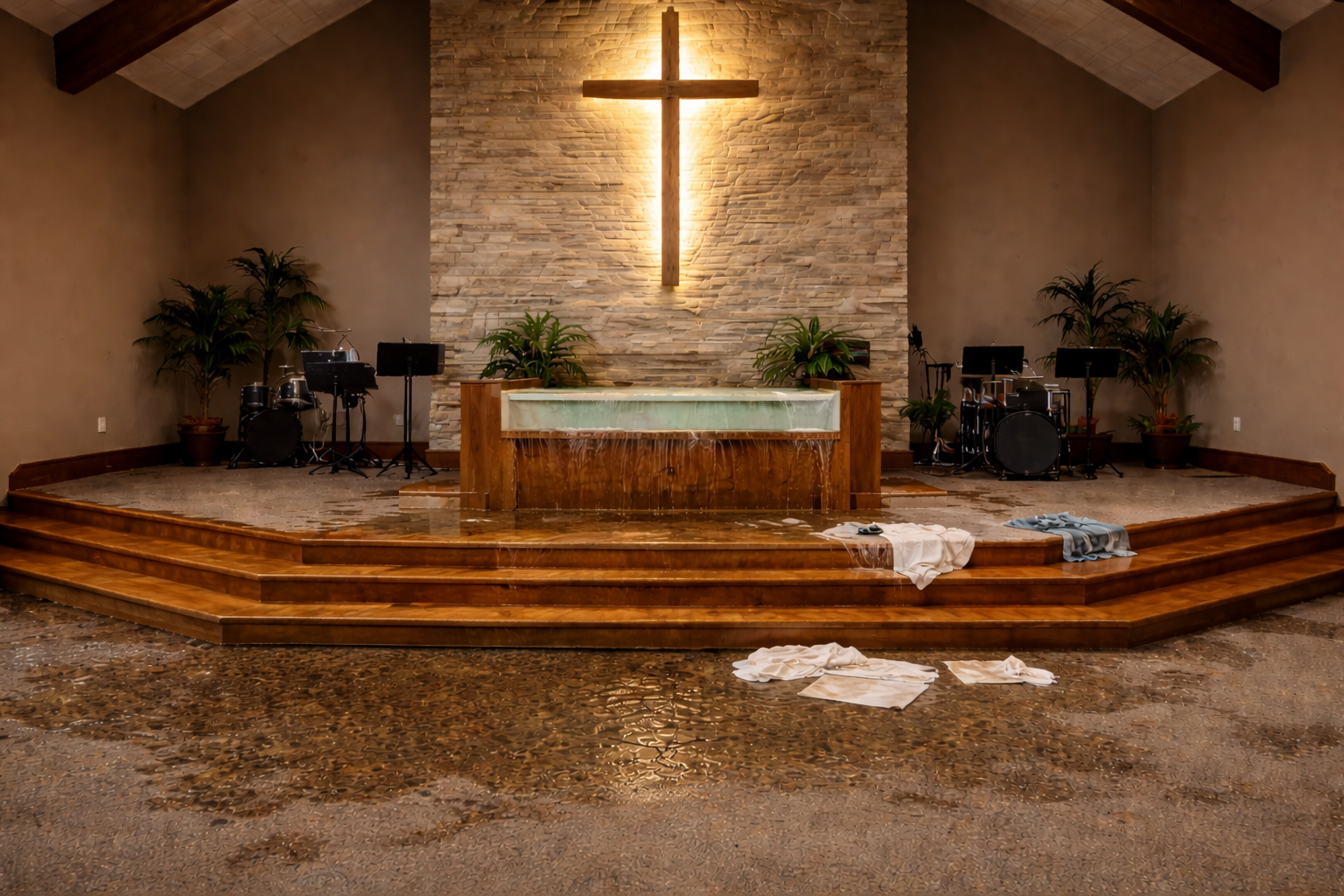
Church baptistry overflow water damage cleanup
Time is critical. Baptistry overflows and interior supply leaks can saturate sanctuary flooring and migrate fast.

What “Done Right” Looks Like

  • Moisture mapping to find the real boundaries of wet materials (not just what you can see).
  • Targeted extraction so carpet systems and transitions don’t hold water underneath.
  • Controlled drying strategy (airflow + dehumidification + temperature) to avoid “humid drying” that stalls progress.
  • Verification with readings to confirm the structure is actually drying — and to prevent repeat issues.
  • Coordination to reduce disruption: equipment placement and access plan around services and meetings when possible.

Church Water Damage FAQs (Accordion)

Click a question — the answer will expand. If you’re actively dealing with water right now, call: (405) 691-8800.

Waiting lets moisture migrate into padding, seams, and wall cavities. Even if the surface “looks okay,” the wet system can expand into adjoining areas. Early stabilization usually reduces disruption and limits scope.
Carpet and pad can trap moisture underneath for days. That hidden moisture can raise indoor humidity and contribute to odor and deterioration. The correct approach is inspection + targeted extraction + verified drying.
Yes. We build an access and equipment plan around high-traffic areas when possible, so the ministry can keep moving while stabilization and drying are underway.
It can be. Baptistry water often spreads over large carpeted areas and into stage platforms and transitions. The visible water is only part of it — the hidden migration is what drives repair costs if not addressed quickly.
Shared walls and base plates allow moisture to travel to adjoining rooms. A proper moisture map checks those adjacent areas early so you don’t “miss it” and face a second problem later.
Similar principles, different pathways. Overhead leaks can wet insulation, ceilings, and walls. The key is finding the wet boundary, controlling humidity, and verifying drying so ceilings and wall cavities don’t stay damp.
Elevated humidity and damp materials can impact indoor air quality, especially for children, elderly members, and those with sensitivities. That’s why stabilization and verified drying matter.
Yes. Documentation helps justify decisions, track progress, and confirm that drying is real — not just “we ran equipment.” It also helps leadership teams communicate clearly and avoid surprises.
If safe: stop the source, keep people out of wet electrical areas, and avoid running fans blindly (it can spread humidity into cavities). Call us and we’ll guide next steps while dispatching.
If there is suspected contamination (backup/overflow), treat it seriously. The response changes: containment, proper removal, and cleaning protocols become critical. Call immediately so we can advise the safest approach.
It depends on materials and how long water sat. Churches often involve large carpeted areas and concealed structures. The fastest path is early extraction + controlled drying + verification — not “waiting it out.”

Protect the Sanctuary. Preserve the Ministry Flow.

If your church in Norman is dealing with water damage, don’t gamble on “it’ll dry.” Early stabilization helps reduce hidden spread, protects indoor air quality, and limits disruption.

Call (405) 691-8800

Scroll to Top